May 19, 2026
We ruined the internet. I helped.
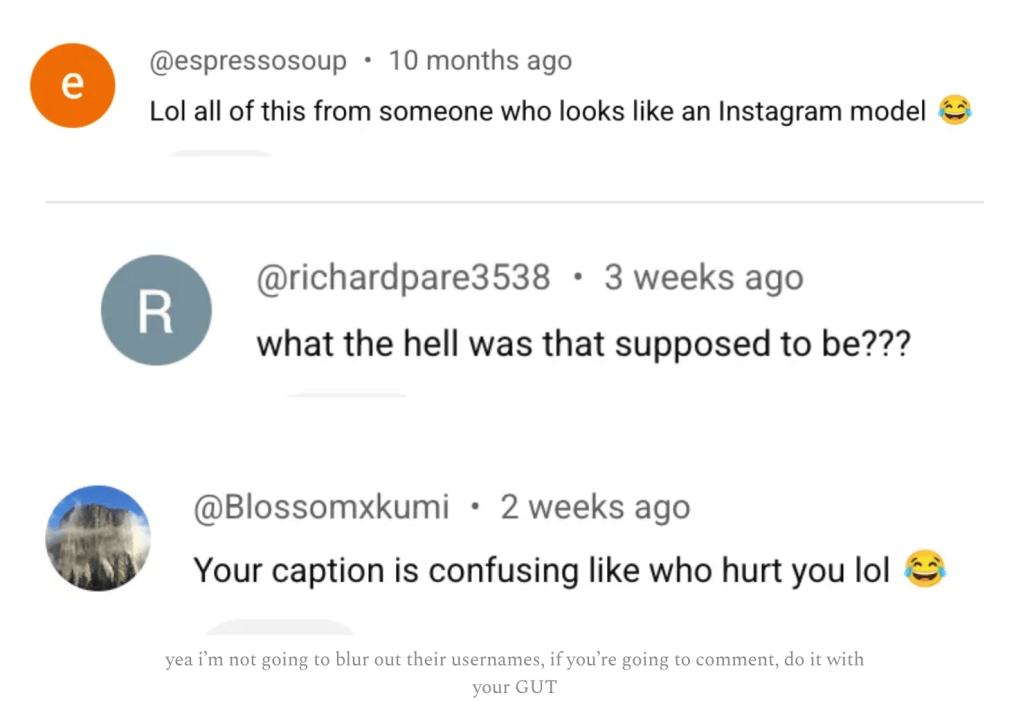
You’ve finally decided that the video you made is edited to perfection, it’s ready to hit the internet, a very small corner of it. You press post. Seconds later, there is already someone in the comments correcting your form, telling you you’re wrong, citing some BS research that goes against literally anything and everything that you said in your video. But you never claimed to be an expert. It doesn’t matter.
You’re wrong.
The comments are no longer somewhere you can engage with the community that you’ve gathered; now they’re a tribunal. The implicit message in this new age of comment fact-checkers is that if you’re not doing it the expert-approved, peer-reviewed, optimized, scientifically fact-checked way, you have no business sharing it online. This shift has fundamentally changed what people are willing to put online and what creators feel like they have to do to avoid it.
On top of that, well, more like underneath it all, a creeping sameness. Scroll for long enough, and everyone sounds the exact same. Perfectly curated videos, flawless hooks, advice that’s been researched and rehearsed until any trace of personality has been sanded off. Everything polished. Everything safe. Only the most successful influencers have opinions that haven’t been focus-grouped against the algorithm first.
They get it. They have it all figured out.
The only thing that makes any content different from the next person’s is the actual human behind it — and that’s exactly the part that everyone keeps hiding! (Myself included, oops)
Before monetization, brand deals, before the world of influencers even existed — people shared things online because they wanted to. They found something that made their lives easier or more enjoyable and wanted to tell someone about it. This article explains it well: mommy bloggers. Mommy bloggers are not posting all the scientifically proven ways to raise a child without messing it up; they are just people living a life and documenting it: “I tried this, and it worked for me”, that was the whole point. They connected other moms and women online through shared experience, simply (to quote Taylor Swift) for the hope of it all. It’s like the ‘early internet’ was a giant word-of-mouth machine between strangers. Sort of like meeting up with your bestie over drinks and saying “oh my god you have to try this”, and the only personal gain was sharing your new discovery with a friend, hopefully to improve their life too. No one asked for your credentials; you could share a recipe for muffins without being investigated for not following the British baking school’s techniques, or recommend a pair of hiking boots without being an ACMG-certified guide. It was all peer-to-peer, experience, and trust, not expert-to-student. The informality was the whole point; it built trust, community, and genuine connection.
But I fear we have lost the plot. Once people and brands realized that this word-of-mouth recommendation system among women could generate revenue, everything changed. Do these people actually like these products? Or are they just being paid to say they like it? The loophole? Becoming an expert. Of course I’ll trust this creator; they’re an expert in their field; they actually know what they’re doing… at least that’s how it appears. So creators started cosplaying as experts with research-heavy scripts, perfectly curated claims, and a perfect life with perfect bodies, perfect cars, and perfect everything in whatever niche they desired. Brands are eating this shit up.
This has not only ostracized authentic creators but also trained audiences to expect every opinion online to be the total truth. You aren’t allowed to just share an opinion anymore; you have to share whatever is ‘right’. Comment sections are now a place to enforce standards, and every video is an invitation for scrutiny. The irony here is that the more ‘expert’ the content is, the more people, literally random people who are definitely way less of an expert, feel entitled to debate and correct it. Come on, you’re the one who opened that door; what do you expect? Meanwhile, actual experts are losing credibility to people who are better at faking it…
It’s also worth noting that content creation and influencing have always been largely women’s spaces, built on the instinct to share the small things that make life a bit more whimsical, a bit easier, a bit more joyful. The monetization and ‘expertification’ of that instinct has a particular sting to it. It has taken something genuinely connective and turned it into a performance review.
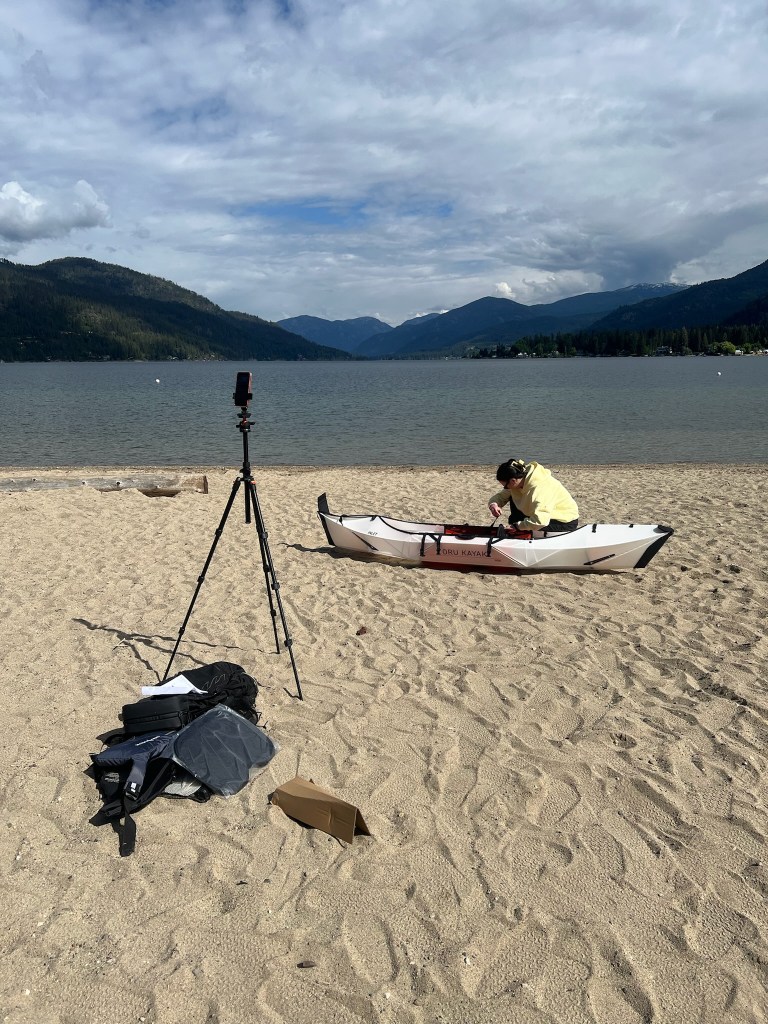
Unfortunately, I kind of rode this wave for a bit, but I’m swimming out of it as quickly as I can. I wasn’t doing it on purpose; it wasn’t a conscious decision at all to be honest. I was just doing what I thought was the best way to grow. I felt pressure to have the correct answer for everything: the best layering system, the best gear for hiking, the best way to break into the outdoors. I was delivering it all with a lot of authority, but it was a performance.
As someone with late-diagnosed ADHD, I’ve naturally spent a lot of my life performing. I have mastered the version of myself that fits in with the popular crowd and lets me pretend I’m normal just like everyone else. So performing online felt natural; it was almost automatic. I honestly didn’t even think about it. People with ADHD spend their whole lives masking: showing people what they think they want to see, putting on whichever personality helps them fly under the radar. It developed quickly in high school, where standing out feels like the worst thing that could ever happen to you, and it followed me straight into my creative work without me ever noticing. I wasn’t sharing things because they genuinely made my life better or because I wanted to pass something good along to the girlies — I was just producing. I was designing content that would attempt to survive the comment section and, hopefully, dominate the algorithm. A lot of that content feels hollow; you can probably tell.
Anyway, because of this, many people stop sharing. The weird tips they accidentally discovered, an unconventional way you do something that somehow works better- all of it fades away and goes unsaid because it can’t survive the tribunal. We lose the casual chattiness, word-of-mouth, the ‘I don’t really know why this works, but it does’. Content has become a monoculture of correct answers, yawn. No one has an opinion anymore because no one is allowed to. Creators must assimilate into modern cultural trends, and consumers end up following suit. Which is honestly boring and less useful than being weird, messy, and real. The science of why something works really matters less to most people than knowing it worked for someone like them. Who literally even cares?! Most of you probably don’t know how your computer works, or the internet, or a microwave, or email, or sleep, or wifi, hell, most of you don’t even know how credit works…and it shows. But you still use all of these things, because they do work… So why are you attacking random people online because they are sharing what worked for them? HMM??
Anyhow, so what gets lost when everyone has to be an expert?
When the price of sharing is expertise, most people just stop sharing. Any influencer content that isn’t in this expert-halo genre gets talked down upon — and look, we already talked about whose space this originally was and what it was built on. So the fact that it’s now been twisted up with dumb podcasts about nothing and a sudden obsession with credentials? Reminds me of the recent discourse around the tech-ification of women in SPAM (you have to spend a lot of time on the internet to understand that one, and I’m sorry). But this is no place for a man.
What if the comment section looked like the old internet again? What if we started commenting as if we were going to read those comments out loud to the person’s face? “Oh, I do it differently, but that’s so interesting.” “I never thought of it like that.” “Same!” “This is so helpful!”. “I do it like this — try that next time!” That used to be the whole point. Chit-chatting with the girls tbfh.

The best content and the best influencers have never been focused on expertise. They have focused on resonating with their people. ‘This worked for me’ from someone you can genuinely relate to is way more useful than a ChatGPT-summarized script from a stranger performing from a supposed position of authority. Max Pete put it well:
“The only thing that actually makes it worth something is the specific way you see things, the stuff only you could say because only you have lived your exact life. Nobody else has your particular combination of experiences, failures, wins, and the way all of that has quietly shaped how you move through the world. When you outsource that part, you are giving away the only thing that actually made it worth sharing in the first place.”
The comment section has made us afraid of our own experiences and personality, and that’s leading to a genuine cultural loss.
Right now I’m trying hard to unravel and unlearn my performance. I thought I’d already done this work, fr. I solo travelled, hostel-hopped, ran away across the country and then to a new one, ran a marathon, did all the things you’re supposed to do when you’re “finding yourself”. And I thought I did, for a while. But here I am again — injured, stationary, unable to literally run away from the question — and apparently there’s another layer to peel back. What do I actually want to say? And wtf am I scared of? I don’t really know what that looks like yet — what I want to share or what makes my point of view unique. But I’m starting with honesty, and I’m bringing you with me, if you want to of course.


Leave a Reply